Emergency Dentist Plano, TX for Severe Sensitivity After Injury
@cristianugxg663
October 26, 2026 · 16 min read
A hard bump to the mouth does not always look dramatic at first. Sometimes there is no obvious chip, no heavy bleeding, and no tooth lying on the floor. What sends people into panic is something less visible, a sudden, intense sensitivity that seems to light up the entire side of the face. Cold air hurts. Water stings. Biting feels wrong. Even breathing through the mouth can set off a sharp, electric pain.
That kind of sensitivity after an injury deserves prompt attention. It may seem minor compared with a knocked out tooth or a split lip, but it can point to a cracked tooth, exposed dentin, a bruised ligament, or damage deep inside the pulp. In some cases, the tooth survives with conservative treatment. In others, waiting a day or two turns a manageable problem into a root canal, an extraction, or a spreading infection. If you are searching for an Emergency dentist Plano, TX after a fall, sports impact, car accident, or unexpected bite injury, the smartest move is to have the tooth evaluated before the pain tells a bigger story.
Why severe sensitivity after trauma is different from ordinary tooth pain
Most people have felt routine sensitivity at some point. A sip of ice water catches one spot for a second, then fades. A whitening treatment causes a day or two of twinges. That is not the same as post-traumatic sensitivity.
After an injury, sensitivity tends to behave differently. It often begins suddenly and has a clear trigger, such as a hit to the face, biting down on a hard olive pit, or clenching during a collision. The pain may radiate farther than expected, which is why patients often struggle to name the exact tooth. It can feel deep, almost like pressure inside the tooth, or raw and exposed, as if the enamel has vanished.
Clinically, that matters because trauma changes the list of likely causes. The issue may be a visible fracture, but not always. Hairline cracks can hide under the gumline or run in a direction that is difficult to see without the right imaging and tests. The periodontal ligament, which anchors the tooth to the bone, can also become inflamed after a blow. That inflammation alone can make a tooth feel tender, high, or strangely sensitive when chewing. In other cases, the nerve tissue inside the tooth has been jarred hard enough that it becomes inflamed and hypersensitive before it later settles down, or before it declines.
The point is simple. Sensitivity after injury is not just “sensitive teeth.” It is trauma, and trauma needs a dental exam built around trauma.
The kinds of injuries that commonly lead to sharp sensitivity
In practice, the injuries that produce severe sensitivity are not limited to the dramatic ones. A teenager gets elbowed during a basketball rebound and says the front tooth “just feels weird.” A parent slips on wet tile while carrying groceries and bites down hard on the back molars. A driver tenses up during a low-speed collision and later notices that one side hurts whenever cold touches it. A child catches a water bottle cap between the teeth and hears a faint crack.
Those scenarios seem different, but they share one detail. The force exceeded what the tooth structure or surrounding ligament was meant to absorb. Once that happens, enamel may craze, dentin may become exposed, fillings can leak at the margins, and previously quiet teeth can start speaking very loudly.
Molars are frequent culprits because they take the brunt of biting forces. Front teeth are common after direct facial trauma. Teeth with older fillings, previous root canals, large restorations, or prior fractures are especially vulnerable. So are teeth that already had subtle decay or wear.
What an emergency dentist looks for first
When someone comes in with acute post-injury sensitivity, the first part of the visit is less about the pain scale and more about the pattern. Dentists want to know how the injury happened, whether the pain started immediately or later, what makes it worse, and whether the bite feels “off.” Timing matters. Pain to cold that lingers can point one way. Pain only on release from biting can point another. Sensitivity that appears alongside tooth mobility or swelling changes the urgency.
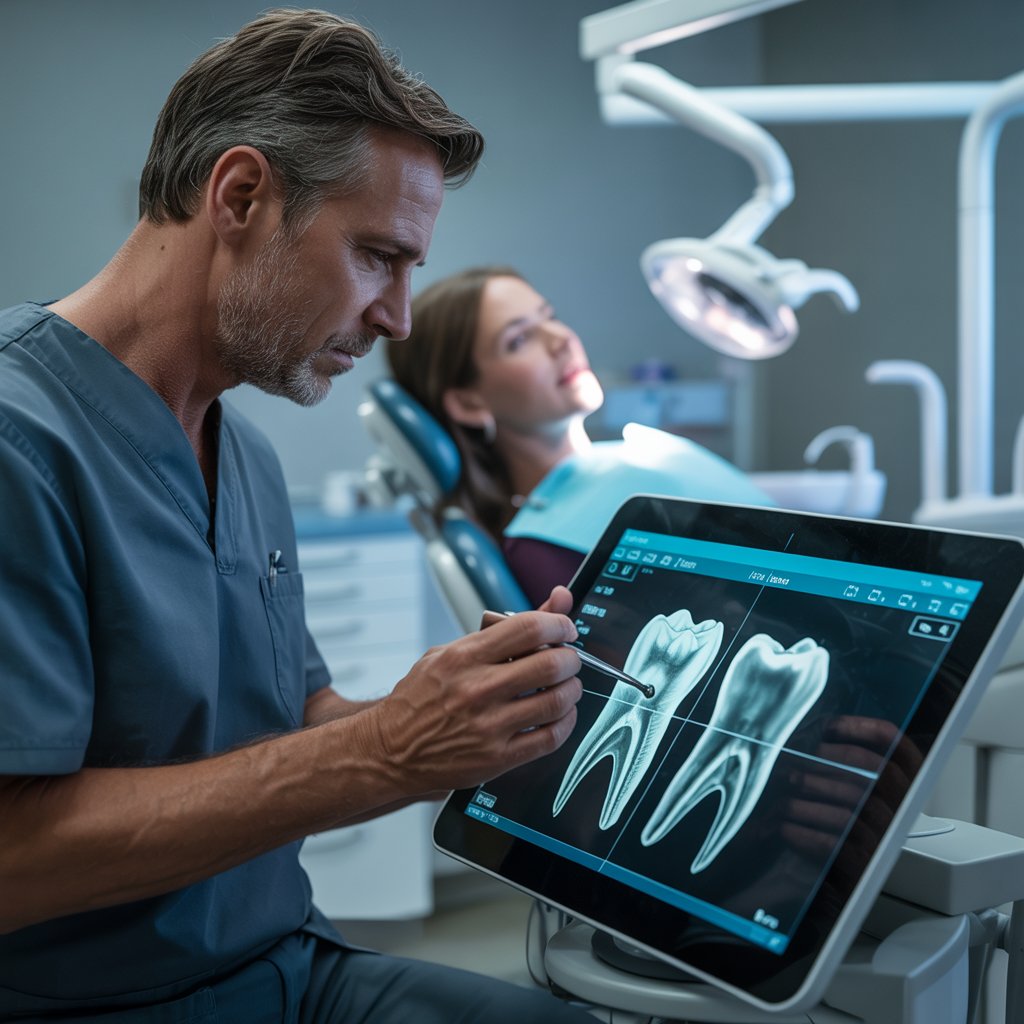
The exam itself usually combines observation with targeted tests. The tooth may be checked for cracks, mobility, percussion tenderness, gumline changes, bite interference, and responses to cold or gentle pressure. X-rays often help, though they do not catch every crack. Depending on the situation, additional imaging may be useful, especially if root damage or bone injury is suspected.
This is where experience makes a difference. Severe sensitivity can come from a crack too fine to show clearly, from a bruised ligament that looks normal on a standard film, or from an older filling that split under stress. It is not unusual for a patient to point to one tooth while the true problem sits next door. A careful emergency evaluation sorts that out before treatment starts.
Red flags that should push you to seek same-day care
Not every sensitive tooth needs a midnight visit, but some symptoms should move the situation out of the “let’s watch it” category.
- Sharp sensitivity after a recent hit, fall, or biting accident
- Pain when biting down, especially if the bite feels uneven
- A visible crack, chipped edge, or loosened tooth
- Swelling, bleeding near the gumline, or a darkening tooth
- Sensitivity that is intense, constant, or worsening over hours
If the tooth has been displaced, if part of the face or jaw also hurts, or if there was a loss of consciousness, medical evaluation may be necessary as well. Dental emergencies sometimes overlap with head and facial injuries, and those broader concerns should not be minimized.
What you can do at home before you get to the office
The period between injury and treatment matters. Good home care can lower the chance of making things worse, though it does not replace an exam.
Rinse gently with lukewarm water to clear blood or debris. Avoid very cold drinks, hot coffee, citrus, alcohol-based mouth rinses, and anything sugary that seems to intensify the pain. If the area is swollen from a facial injury, a cold compress on the outside of the cheek can help with inflammation. Choose soft foods and chew on the opposite side. If the tooth feels high or unstable, avoid testing it over and over. People do this constantly when they are anxious, and repeated tapping or biting can turn a stressed tooth into an angrier one.
For pain relief, many adults can use an over-the-counter anti-inflammatory if medically appropriate for them. That said, pain medication can blur the issue without solving it. It should be a bridge to care, not the plan itself. Also, do not place aspirin directly on the gum. That old home remedy can burn the tissue.
If a fragment of tooth broke off and you can find it, bring it with you. In some cases, especially with a clean fracture of a front tooth, the piece may help the dentist evaluate the pattern of damage, and sometimes it can even be bonded back depending on the condition of the fragment and the tooth.
Why cold sensitivity can mean several very different things
One of the hardest parts of trauma care is that the same symptom can come from more than one problem. Cold sensitivity after injury is a perfect example.
If enamel chipped and dentin became exposed, cold may trigger a short, sharp pain because the underlying tubules are open. If a crack formed, cold can move fluid within the crack line and provoke a much stronger response. If the pulp inside the tooth became inflamed, the cold pain may linger longer than expected. If the bite shifted because the tooth moved slightly in the socket, the sensitivity may show up mostly during chewing rather than temperature changes.
These distinctions sound technical, but they guide treatment. A small chip with exposed dentin might respond well to bonding and protection. A crack crossing into deeper structure may need a crown, and if the nerve is irreversibly inflamed, root canal treatment might enter the picture. A ligament injury may call for bite adjustment, soft diet, and close follow-up. The symptom is the alarm. The cause determines the fix.
The treatments an emergency dentist may recommend
The goal in the first visit is usually to relieve pain, protect the tooth, and stabilize the situation. Definitive treatment depends on what the exam finds.
Sometimes the solution is surprisingly conservative. A smooth-edged chip can be bonded. Exposed dentin can be sealed. A filling that was loosened by impact can be replaced. If the bite is hitting too hard on a bruised tooth, a small adjustment can make a big difference. These are the cases everyone hopes for.
Other situations require more involved care. A cracked cusp on a molar may need a crown to hold the remaining tooth together. If the crack or trauma has reached the nerve, root canal treatment may be recommended to eliminate pain and preserve the tooth structure. A tooth that has been displaced may need to be gently repositioned and splinted. If the root itself is fractured in an unfavorable way, the prognosis changes, and honest discussion becomes critical.
There is also a category that frustrates patients because it sounds less definite. The tooth may be “wait and monitor.” That does not mean nothing is wrong. It means the pulp and surrounding tissues were injured, but the final outcome is not yet clear. In these cases, a skilled dentist explains what signs to watch, when to return, and what future treatment might still be needed. Traumatized teeth can evolve over days or weeks.
Timing matters more than many people realize
The window after dental trauma is not just about pain control. It is about preserving options.
A cracked tooth seen quickly may be stabilized before the crack propagates. A tooth with a compromised filling margin can be resealed before bacteria move inward. A displaced tooth has a better chance when managed early. Even when the final treatment ends up being a root canal or crown, prompt diagnosis often prevents the sort of worsening that leads to infection, abscess, or loss of the tooth.
This is one reason people in pain often search urgently for an Emergency dentist Plano, TX instead of waiting for the next routine opening. In acute trauma cases, that instinct is usually right. A few hours may not change everything, but a few days sometimes do.
Cases that are easy to underestimate
Some of the most problematic injury-related sensitivity begins with what patients describe as “not a big deal.” They bit a popcorn kernel. They clenched during a stressful moment. Their child bumped their chin while playing. There was no blood, so they assumed the pain would settle.
A common example is the vertically cracked molar with little to see from the outside. The patient reports that cold hurts and biting feels strange, especially on one side of the tooth. X-rays can look unremarkable. If they keep chewing on it for several days, the crack can deepen, part of the cusp can break off, and the treatment plan becomes more expensive and less predictable.
Another easy-to-miss situation is a tooth with an old silver filling or a large composite restoration. Those teeth have already lost a meaningful amount of natural structure. A moderate impact that a healthy untouched tooth might tolerate can be enough to split the remaining walls of a heavily restored tooth. The pain may come and go at first, which falsely reassures people.
Children and teens also present unique judgment calls. Their teeth and supporting structures respond differently to trauma, and the long-term implications can be greater because those teeth are expected to last decades. A front tooth that seems merely sensitive after a sports injury may later discolor or show signs of pulp damage. Follow-up is not optional in those cases.
What the visit may feel like from the patient side
People often assume emergency dental visits are rushed and purely reactive. Good trauma care feels different. Yes, the pace is faster because pain and timing matter, but the best visits are methodical.
Expect questions that seem oddly specific. Did the pain start before or after the swelling? Does it hurt more on pressure or release? Is the cold pain brief or lingering? Have you had previous work on that tooth? Those details help narrow the source.
The exam is usually focused, but not careless. Sometimes the dentist avoids pushing too hard on a suspicious tooth because more force adds no value. Other times, a bite test with a small instrument reveals the problem immediately. Imaging may be taken from more than one angle. If you are in significant pain, part of the visit may involve temporary steps first, such as smoothing a sharp edge, placing a protective material, or adjusting the bite before planning the next phase.
The best emergency care also sets expectations. Teeth that take a traumatic hit can change over time. A tooth that tests normal on day one may not behave the same way in two weeks. A clear explanation of follow-up matters almost as much as the immediate fix.
When sensitivity points to a nerve problem
Not all nerve irritation means the tooth is doomed, but some patterns are concerning. Lingering pain to cold, spontaneous throbbing, waking at night, and a feeling of pressure from inside the tooth can suggest that the pulp is not recovering well. Trauma can inflame the pulp enough that the tissue eventually loses its blood supply or becomes irreversibly irritated.
In those cases, root canal treatment is often the tooth-saving option people fear unnecessarily. The procedure removes the damaged pulp, disinfects the inner space, and seals it so the tooth can remain in function, usually with a protective restoration afterward. For many post-traumatic cases, this is what allows the patient to keep the tooth for years rather than moving to extraction.
The key is not to self-diagnose from symptoms alone. Some cracked teeth mimic nerve pain. Some bruised teeth are dramatic for a few days, then settle with conservative care. That is why severe sensitivity after injury belongs in a dental chair, not on a message board.
Practical questions patients often ask
One of the first questions is whether they should avoid brushing the area. Usually, no. Gentle brushing is better than neglect, especially if the gumline was nicked or the mouth feels unpleasant after the injury. The technique just needs to be careful. Soft bristles and lukewarm water are wise choices.
Another common question is whether the tooth will “calm down on its own.” Sometimes it does, especially with minor ligament bruising or a small area of exposed dentin. But severe sensitivity after trauma is not something to bet on casually. The cost of being wrong can be substantial.
People also ask whether a lack of visible damage is reassuring. It helps, but only a little. Some of the most painful cracks are almost invisible without magnification, transillumination, or a pattern of symptoms that points the dentist in the right direction.
How to protect the tooth after emergency treatment
Once the immediate crisis is addressed, the next few days matter. Follow the instructions you are given, especially around diet and bite protection. If a temporary material was placed, treat it as temporary. If a crown has been recommended, delaying it because the pain improved can be a mistake. Pain relief does not always mean Emergency dentist Plano, TX the structural risk has passed.
For many patients, recovery looks like soft foods, avoiding extreme temperatures, and watching for changes such as swelling, increased tenderness, or new discoloration. If a front tooth was injured, photos taken over the next several weeks can sometimes help Emergency dentist Plano, TX document subtle color changes that are easier to miss day to day. For athletes, this is the right time to talk seriously about a custom mouthguard. It is much cheaper than repeating the same emergency.
Choosing the right emergency dental response in Plano
Not every office handles trauma with the same comfort level. Scheduling speed matters, but so does diagnostic judgment. When looking for an Emergency dentist Plano, TX, patients should pay attention to whether the practice treats dental trauma routinely, offers same-day evaluation when possible, and explains the difference between temporary pain relief and definitive care.
That last point is important. A numbed tooth and a prescription can feel like treatment, but if the crack, bite issue, or pulpal injury remains undiagnosed, the relief may be short-lived. Good emergency dentistry balances urgency with precision. It gets you out of pain while preserving the best chance to keep the tooth healthy and functional.
A simple plan for the first few hours
If you or a family member develops severe tooth sensitivity right after an injury, keep the response straightforward.
- Rinse gently with lukewarm water and stop chewing on that side
- Use a cold compress on the outside of the face if there is swelling
- Avoid very hot, very cold, hard, or sugary foods and drinks
- Take an appropriate over-the-counter pain reliever if you normally can
- Arrange prompt evaluation with an emergency dental office
That short list is not glamorous, but it prevents many avoidable mistakes. The biggest one is delay. Teeth often give a narrow warning before the situation becomes larger, more painful, and more expensive.
A traumatized tooth can still be saved even when the sensitivity feels severe. The deciding factors are usually accurate diagnosis, timely care, and realistic follow-up. When the pain is sharp, the bite feels wrong, or the cold response is out of proportion to what you see in the mirror, trust the symptom. It is telling you that the injury reached deeper than the surface.
Vitality Dental
1220 Coit Rd # 106, Plano, TX 75075, United States
+1 972-645-4100
FAQ About Emergency dentist Plano, TX
Will the ER do anything for dental pain?
An emergency department can assess urgent symptoms and provide medical stabilization. Definitive treatment of the tooth usually requires a dentist. Seek emergency medical care for breathing or swallowing difficulty, uncontrolled bleeding, or serious facial injury.
What to do if I have a dental emergency in the middle of the night?
Contact a dentist or after-hours dental service promptly for guidance. If a permanent tooth is knocked out, keep it moist in milk while seeking immediate care. If symptoms suggest a medical emergency, go to an emergency department.
What qualifies as a dental emergency?
A knocked-out permanent tooth, severe or persistent tooth pain, a significant dental injury, or swelling may require urgent dental assessment. Call a dentist to describe the symptoms and determine timing. Uncontrolled bleeding or difficulty breathing or swallowing requires emergency medical care.