What Happens If You Delay Seeing an Emergency Dentist?
@cristianugxg663
November 23, 2026 · 15 min read
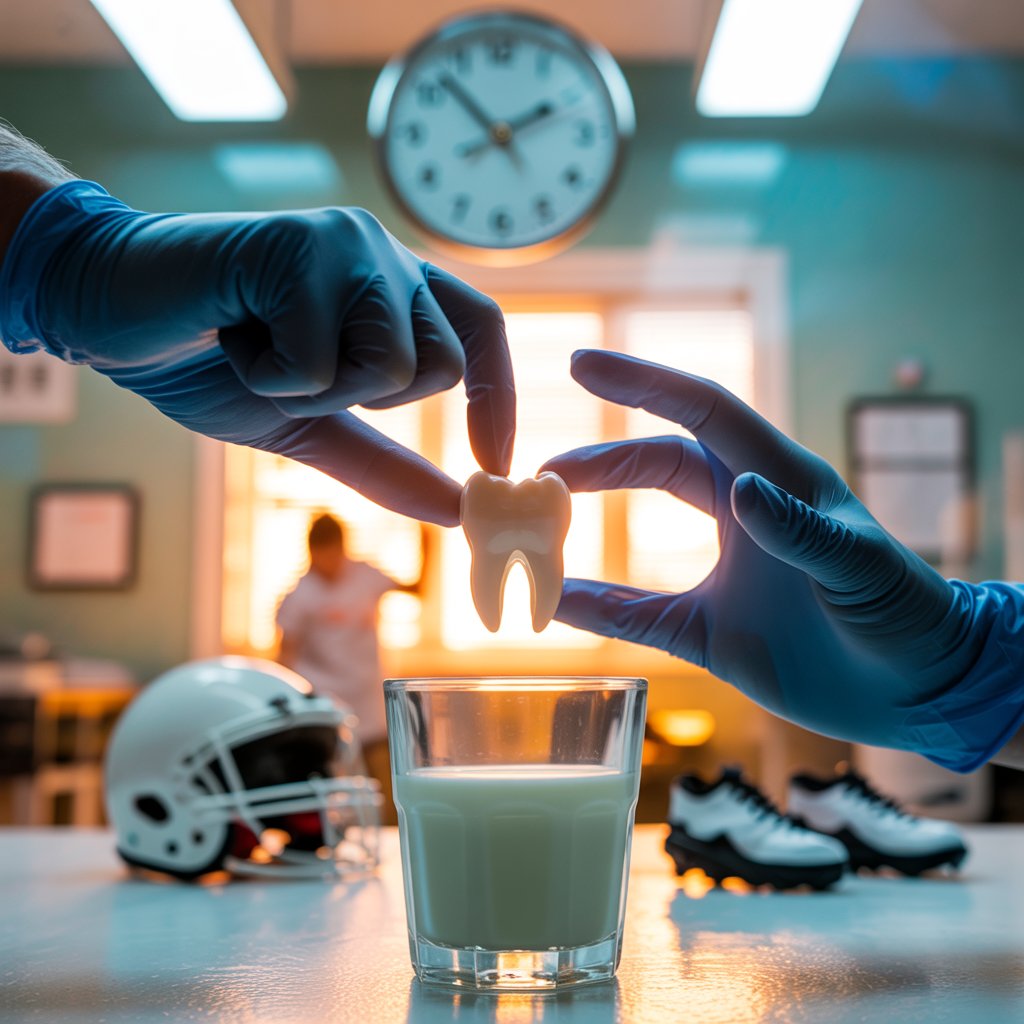
A surprising number of dental emergencies begin with a sentence people tell themselves to buy time: “I’ll see how it feels tomorrow.”
Sometimes tomorrow is fine. A brief zing from cold water settles down. A sore spot from biting your cheek heals on its own. But when the problem is a cracked tooth, a spreading infection, uncontrolled bleeding, or a crown that came off a heavily restored tooth, delay can turn a manageable appointment into a much more complicated situation.
That is the part many people do not see at first. Dental problems are often dynamic. They rarely stay frozen at the exact level of pain or damage you noticed at 9 p.m. On a Friday. Teeth crack further. Inflammation deepens. Bacteria move. Soft tissue swells. What might have been treatable with a straightforward filling or limited repair can become a root canal, an extraction, or, in some cases, a medical emergency.
An Emergency Dentist is not there simply to relieve pain, although pain relief matters. The real value is protecting the tooth, controlling infection, and preventing small injuries from becoming expensive, time-consuming problems.
Why dental delay is different from “watch and wait”
People often compare dental pain to a headache, a strained muscle, or a mild cold. That comparison causes trouble. A tooth does not heal like a scraped knee. Enamel does not grow back. A cavity does not shrink. A cracked cusp does not fuse itself together over the weekend.
There are a few dental issues that can be monitored briefly, especially if symptoms are mild and improving. But genuine emergencies usually worsen because the mouth is a difficult place to rest. You chew, swallow, talk, clench, drink hot coffee, sip cold water, and sleep with your jaw under pressure. The injured area keeps getting challenged.
I have seen this play out in ordinary ways. A patient loses a filling on Thursday and says it only felt “a little sensitive.” By Monday, the exposed tooth is throbbing because food has packed into the cavity and the nerve has become inflamed. Another patient chips a front tooth, assumes it is only cosmetic, then notices the crack line deepening after two days of biting into sandwiches and grinding at night. Neither person intended to make the problem worse. They simply underestimated how quickly dental damage can progress.
Pain is not the only thing getting worse
People often use pain as the only decision point. If it hurts more, they call. If the pain fades, they assume the danger has passed. That can be a costly misunderstanding.
Dental pain can fluctuate. In fact, one of the more concerning patterns is severe tooth pain that suddenly stops. Patients sometimes feel relieved, then delay even longer. But pain that disappears abruptly can mean the nerve inside the tooth has died. The pressure may ease temporarily, yet infection can continue silently around the root. Days later, swelling appears and the problem is far more serious than it was when the tooth first started hurting.
Swelling is another sign people misread. A little puffiness in the gum may seem minor, especially if you can still go to work and eat soft foods. But swelling often means the body is reacting to infection or trauma. In the mouth, those processes do not always stay local. They can spread into surrounding tissues, make it harder to open the mouth, and in severe cases affect swallowing or breathing. That is no longer just a dental inconvenience.
What can happen if you wait too long
Delaying care does not guarantee disaster. Some cases remain stable for a short time. But these are the risks dentists worry about, because they are common and preventable:
- A cavity or broken tooth can deepen until the nerve is involved, turning a simple restoration into root canal treatment or extraction.
- An infection can spread beyond the tooth and gum into nearby tissue, causing facial swelling, fever, and systemic illness.
- A knocked-out or displaced tooth can lose its best chance of being saved if treatment is delayed even by an hour or two.
- A loose crown, bridge, or filling can leave a tooth vulnerable to fracture, shifting, or contamination.
- Bleeding after trauma or extraction can continue longer than expected and become harder to control without prompt care.
Those outcomes differ in severity, but they share one pattern: the later the intervention, the fewer conservative options tend to remain.
The hidden cost of waiting
The financial side deserves plain language. People often postpone care because they are worried about cost, and that concern is real. Emergency dentistry can feel unplanned and disruptive. Yet waiting is frequently the more expensive path.
A small cavity caught early may need a filling. Leave it long enough and the tooth may require a crown. Add nerve involvement and you are looking at a root canal plus a crown. If the tooth becomes non-restorable, the next decision may be extraction followed by an implant or bridge, both of which involve more visits, more healing time, and significantly greater expense.
The same logic applies to broken teeth. When a fracture is limited, a dentist may be able to smooth the area, bond it, or protect it with a restoration. If the crack extends below the gumline or into the root, saving the tooth becomes much harder and sometimes impossible.
Time also costs something less obvious: lost work hours, poor sleep, repeated pain cycles, and emergency visits outside normal office schedules. Many patients who delay are trying to avoid disruption. Ironically, delay often creates more of it.
Infection is where the stakes change
Not every Emergency Dentist dental emergency is infectious. Some are mechanical, such as a fractured denture or lost crown. Some are traumatic, such as a tooth getting hit during sports. But infections are the cases that can change from urgent to dangerous faster than people expect.
The mouth contains a dense bacterial environment. When decay reaches the pulp, or when a crack gives bacteria a path into deeper structures, the body responds with inflammation. If that process overwhelms local defenses, infection can collect at the root tip or spread through soft tissue planes in the face and jaw.
Most dental infections remain localized at first. You may notice a throbbing tooth, gum tenderness, a bad taste, or mild swelling. Delay can allow pressure to build and bacteria to spread. Patients sometimes arrive with one side of the face visibly enlarged, unable to chew comfortably, feverish, or unable to sleep. In severe situations, emergency medical care may be necessary in addition to dental treatment.
This is why dentists take facial swelling, fever, difficulty swallowing, or trouble breathing so seriously. Those are not symptoms to “sleep off.” They suggest the problem has moved beyond a routine appointment.
Cracked teeth rarely get kinder with time
Cracks are especially deceptive. A tooth can function well enough that people convince themselves it cannot be badly damaged. They can still eat, talk, and go about the day, so they postpone evaluation.
The problem is that cracks are structural failures. Every bite can propagate the crack a little farther. If the damage starts in a cusp, treatment may be fairly straightforward if addressed early. If the crack reaches the pulp, pain becomes more likely and root canal treatment may be needed. If it runs vertically into the root, the prognosis drops sharply.
This is one reason an Emergency Dentist may recommend treatment even when pain is not extreme. Pain is only one factor. Structural integrity matters just as much. A tooth that looks “not too bad” in the mirror can still be one meal away from splitting.
Lost fillings and crowns are more than annoyances
People often classify a lost filling or crown as inconvenient rather than urgent. Sometimes that is fair for a brief period, particularly if there is no pain and the tooth is otherwise intact. But the risks depend on what was underneath.
Teeth that wear crowns have usually already lost substantial natural structure. Without the crown in place, that tooth may be fragile. It can drift, trap food, become highly sensitive, or fracture under normal chewing pressure. The longer it remains uncovered, the less predictable the repair can be. A crown that once fit may no longer seat properly if the tooth shifts or if temporary material and debris alter the contact surfaces.
A lost filling creates a similar issue. The exposed area can become sensitive to temperature and sweets, yes, but it can also collect food and bacteria, deepening the defect. If a wall of the tooth breaks away while you wait, the treatment plan changes.
Trauma has a short window for the best outcome
Dental trauma is one of the clearest examples of why timing matters. A knocked-out permanent tooth has its best chance of being saved when it is reimplanted quickly, ideally within minutes and generally within an hour if handled correctly. That does not mean all hope is lost after that point, but success declines as the root surface dries and the supporting cells are damaged.
A tooth that has been pushed out of position, loosened, or fractured after a fall or sports injury may look stable enough to ignore, especially if bleeding slows. But trauma can damage the root, the supporting bone, the nerve supply, or all three. Prompt evaluation gives the dentist a chance to reposition, splint, monitor vitality, and reduce the risk of long-term complications.
Children complicate the picture because baby teeth and adult teeth behave differently after injury. Parents sometimes wait because the child “seems okay now.” Yet an injured baby tooth can affect the developing permanent tooth underneath, and a traumatized permanent tooth in a child or teenager may require timely stabilization to preserve it.
Delay can make diagnosis harder
There is another practical issue patients rarely consider: waiting can blur the original story.
When someone comes in soon after the event, the dentist can often identify the source clearly. Which tooth was hit, which restoration came out, when the swelling began, what triggered the pain, whether the crown still fits. After several days of self-management, the picture gets murkier. Pain may radiate. Multiple teeth may become sensitive. Temporary products from the pharmacy may cover the area. Swelling may distort the tissues. A simple problem becomes harder to evaluate accurately.
That does not mean dentists cannot sort it out. They do it every day. But earlier assessment usually means cleaner information and a more direct path to treatment.
Temporary home measures have limits
Home care has a role, but only as a bridge. Warm saltwater rinses can soothe irritated gum tissue. Cold compresses can help control swelling from external trauma. Over-the-counter pain medication, used as directed and when medically appropriate, may make the situation more tolerable until you are seen.
The trouble starts when temporary relief gets mistaken for resolution. Clove oil may dull a tooth for a while. Temporary cement from a pharmacy may hold a crown briefly. Ice may reduce swelling for the evening. None of those measures treats decay, repairs a crack, or removes infection.
One point is worth stating clearly because bad advice circulates constantly: do not place aspirin directly on the gum or tooth. It does not fix the problem and can burn the tissue. Likewise, do not ignore a spreading swelling just because rinses make it feel cleaner for a few hours.
When delay is especially risky
Some situations justify same-day contact without much debate. If you have dental pain with facial swelling, fever, trauma involving a permanent tooth, uncontrolled bleeding, or a broken tooth with severe pain, waiting can close off better treatment options.
Here are the signs that should move you from “I’ll monitor it” to “I need to call now”:
- Swelling of the face, jaw, or gum, especially if it is increasing
- Severe, throbbing, or waking-you-up pain
- A knocked-out, displaced, or loose permanent tooth after injury
- Bleeding that does not stop with firm pressure
- Difficulty swallowing, opening the mouth, or breathing
Those symptoms do not always mean the worst-case scenario is happening, but they do mean you should stop guessing.
What an Emergency Dentist is trying to prevent
An emergency visit is not always about definitive treatment in one sitting. Often the immediate goal is stabilization. That may mean draining an abscess, placing a temporary restoration, recementing a crown, splinting a mobile tooth, prescribing medication when indicated, or determining whether the problem needs urgent specialty care.
This matters because patients sometimes think, “If they can’t finish everything tonight, why go?” The answer is that crisis control changes outcomes. Relieving pressure, sealing exposed dentin, protecting a fracture, or catching an infection before it spreads can preserve options for later. Dentistry often works in stages, especially when inflammation or trauma is involved.
A common example is a tooth with advanced decay causing intense pain. The emergency appointment may not be the final crown visit, but removing the inflamed tissue, starting root canal treatment, or placing a protective temporary can stop the spiral. That single step may save the tooth.
The emotional side of delay
Fear plays a larger role than many people admit. Some delay because they are embarrassed that they have not been in for years. Others are afraid of being judged, afraid of needles, afraid of hearing bad news, or afraid that treatment will cost more than they can handle.
Experienced dental teams see this every day. The people who call with emergencies are not unusual or irresponsible. They are often tired, uncomfortable, and worried. The fastest way to reduce the stress is usually to get examined while the problem is still contained. Uncertainty tends to make dental fear worse. Clear answers, even when the news is not ideal, usually lower the temperature in the room.
I have seen patients spend three sleepless nights dreading what the dentist might say, only to learn the tooth was very treatable if addressed immediately. I have also seen the opposite, where avoidance allowed a fixable situation to tip into extraction. The emotional cost of waiting can be just as real as the physical one.
What to do while you are arranging care
Short-term self-care can help you get safely to the appointment, but it should stay simple and sensible.
- Rinse gently with warm saltwater and keep the area as clean as you can.
- Use a cold compress on the outside of the face for swelling from trauma.
- Take over-the-counter pain relief as directed, if you normally can take those medications.
- If a permanent tooth is knocked out, hold it by the crown, not the root, and seek immediate care.
- Bring any broken tooth piece, crown, or appliance with you if you still have it.
If you have difficulty breathing, trouble swallowing, rapidly increasing swelling, or feel seriously unwell, seek urgent medical attention right away.
Timing changes the treatment menu
One of the simplest ways to understand dental delay is to think of it as narrowing choices. Early on, the menu is broad. A crack might be bonded or crowned. Decay might be filled. A painful tooth might be stabilized before infection expands. A knocked-out tooth might still be saved.
As time passes, the menu shrinks. Once the nerve is irreversibly damaged, root canal treatment may become the minimum needed to keep the tooth. Once a fracture drops below the gumline, restoration gets harder. Once an infection spreads through soft tissue, management becomes more urgent and medically significant. Once a tooth cannot be saved, the conversation shifts to replacement rather than repair.
Patients often ask whether waiting “a few days” really matters. Sometimes it does not change the final outcome. Sometimes it changes everything. The trouble is that you usually cannot tell from home which category you are in.
A practical rule that works well
If the problem involves significant pain, swelling, bleeding, trauma, or a sudden change in how a tooth feels or fits together, assume it deserves prompt professional input. You do not need to diagnose it yourself. That is the dentist’s job.
Good emergency care is less about drama and more about timing. Most dental emergencies are very manageable when treated early. Delay is what allows them to become complicated.
A toothache can be more than a toothache. A chipped tooth can be the start of a fracture line. A lost crown can be the beginning of a broken tooth. A swollen gum can be the visible tip of a deeper infection. Seeing an Emergency Dentist promptly gives you the best chance of stopping the problem at the stage where dentistry is simpler, safer, and more conservative.
When people postpone, they are often hoping the issue will settle down. Sometimes discomfort does ebb for a while. The risk is that the damage keeps moving underneath the surface. By the time the symptoms force action, the easiest solutions may already be gone.
Vitality Dental
1220 Coit Rd # 106, Plano, TX 75075, United States
+1 972-645-4100
FAQ About Emergency Dentist
What counts as a dental emergency?
A knocked-out tooth, significant mouth injury, severe tooth pain, or painful swelling warrants prompt evaluation. Call your dentist and describe your symptoms so the office can advise you on how urgently you need care.
What should I do if I knock out a permanent tooth?
Call a dentist immediately. Handle the tooth by the crown, avoid touching the root, and keep it moist. If you cannot put it back into the socket easily, transport it in milk or a tooth-preservation solution. Bring it with you to the appointment.
Should I go to the emergency room for a dental emergency?
Seek emergency medical care right away if you have trouble breathing or swallowing, uncontrolled bleeding, or a serious facial injury. For an isolated tooth injury or toothache without those symptoms, call a dentist promptly for guidance.